carnac standing stones
The Carnac Standing Stones: Discover Brittany’s Greatest Prehistoric Mystery

The Carnac Standing Stones: Discover Brittany's Greatest Prehistoric Mystery

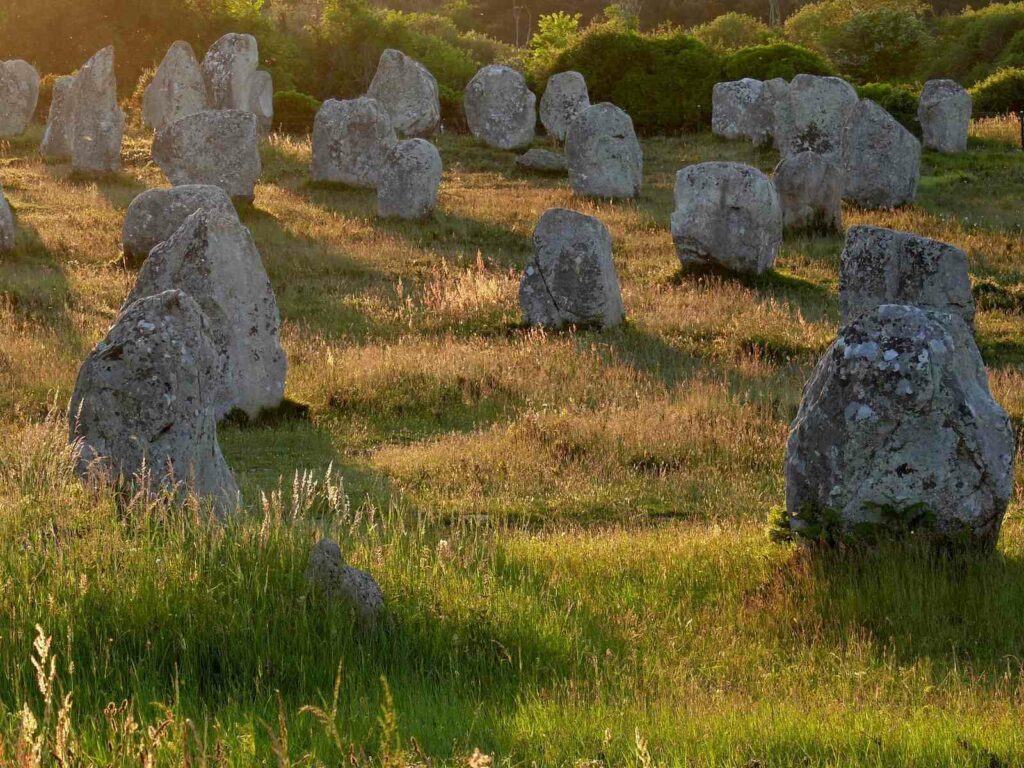
The Carnac Standing Stones are among the most extraordinary prehistoric monuments in the world. Located in southern Brittany, near the Gulf of Morbihan, they form the largest concentration of standing stones ever discovered. More than 3,000 ancient stones, known as menhirs, stretch across the countryside in long, carefully arranged rows, creating a landscape unlike anywhere else in Europe.

Older than both Stonehenge and the Egyptian pyramids, the Carnac Standing Stones have fascinated archaeologists, historians, and visitors for centuries. Despite decades of research, their true purpose remains one of history’s greatest unsolved mysteries, making Carnac one of the most remarkable places to visit in France.

What Are the Carnac Standing Stones?

The Carnac Standing Stones are a vast collection of menhirs—large upright stones erected by Neolithic communities between 4500 and 3300 BC.

The word menhir comes from the Breton language:

  • Men means stone
  • Hir means long

Quite simply, a menhir is a single upright standing stone. While isolated menhirs can be found throughout Europe, Carnac is unique because thousands of them have been arranged into long, remarkably straight alignments stretching over four kilometres.

The stones vary enormously in size. Some stand little more than a metre tall, while others rise to nearly seven metres, each carved from locally sourced granite and transported using methods that still puzzle archaeologists today.

Explore the Three Main Alignments

The Carnac Standing Stones are divided into three principal groups, each with its own distinctive character.

Ménec Alignments

The Ménec Alignments are the best-known section and often provide visitors with their first glimpse of Carnac’s incredible prehistoric landscape.

Here, more than 1,000 standing stones are arranged in eleven perfectly ordered rows extending across open countryside. At either end of the alignment are the remains of prehistoric stone circles, suggesting the site may once have played an important ceremonial role.

Kermario Alignments

Further east lies the Kermario Alignments, home to some of the tallest menhirs in Carnac.

Many visitors consider this section the most spectacular, with impressive stones rising dramatically above the surrounding fields. From nearby viewpoints, it’s possible to appreciate the incredible scale of the alignments stretching towards the horizon.

Kerlescan Alignments

The quieter Kerlescan Alignments contain around 500 standing stones and offer a more peaceful atmosphere for visitors wanting to explore away from larger crowds.

This beautifully preserved site also includes a large stone circle, adding further intrigue to one of Brittany’s most fascinating archaeological landscapes.

Why Were the Standing Stones Built?

Perhaps the biggest question surrounding the Carnac Standing Stones is why they were built in the first place.

Despite centuries of archaeological investigation, no single explanation has been proven. Several theories continue to be debated.

Some researchers believe the stones formed part of vast ceremonial or religious sites where prehistoric communities gathered for rituals and celebrations. Others suggest the alignments may have been linked to astronomical observations, marking important solar or lunar events throughout the year.

Other theories propose that the stones served as territorial markers, ancient processional routes, or monuments honouring important individuals.

The mystery surrounding their purpose is one of the reasons Carnac remains so captivating. Every visitor is left wondering how Neolithic communities organised such an extraordinary construction project thousands of years before modern engineering.

Menhirs, Dolmens and Tumuli: What's the Difference?

Many visitors assume every prehistoric monument in Carnac is a standing stone, but the landscape actually contains several different types of megalithic structures.

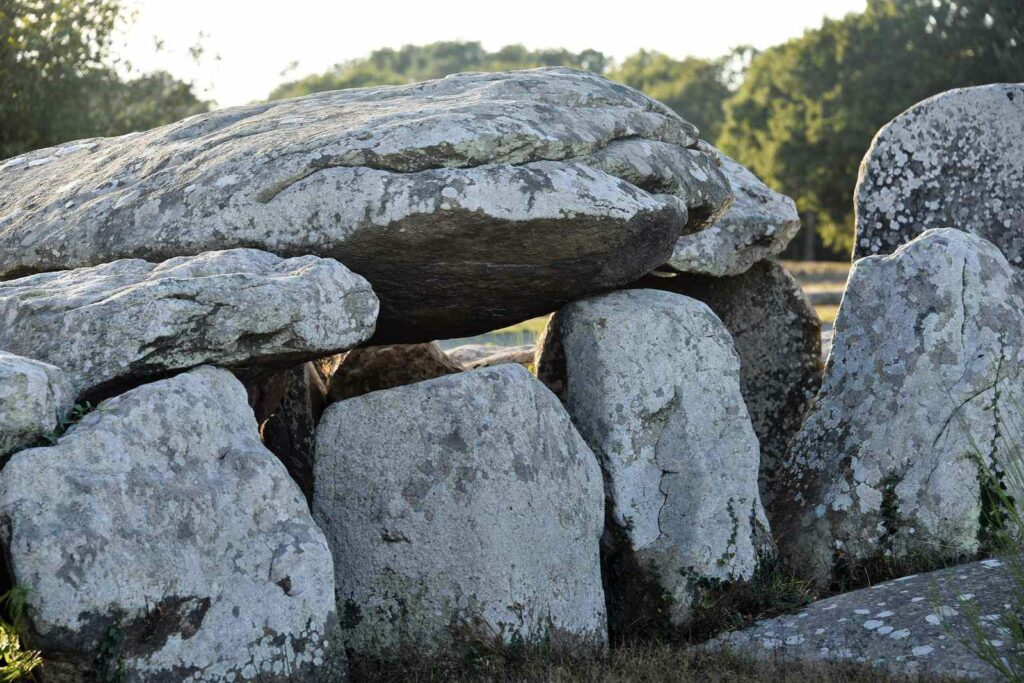
A menhir is a single upright standing stone, while a dolmen is a prehistoric burial chamber formed from several upright stones supporting a large horizontal capstone.

Carnac is also home to impressive tumuli, or burial mounds, the most famous being the Saint-Michel Tumulus, one of the largest prehistoric burial monuments in Europe. Built around 4500 BC, it contains remarkable archaeological treasures and offers sweeping views across Carnac and the Bay of Quiberon.

Together, these monuments make Carnac one of the richest prehistoric landscapes anywhere in the world.

Leave a Reply

Your email address will not be published. Required fields are marked *

X